Unclean water and the strain it puts on countries healthcare systems

Unclean water doesn’t just cause illness; it creates a cycle of disease, poverty, and strain on national healthcare systems, especially in low-income regions. Here’s a breakdown of the main diseases and systemic impacts:

1. Major Diseases Caused by Unclean Water

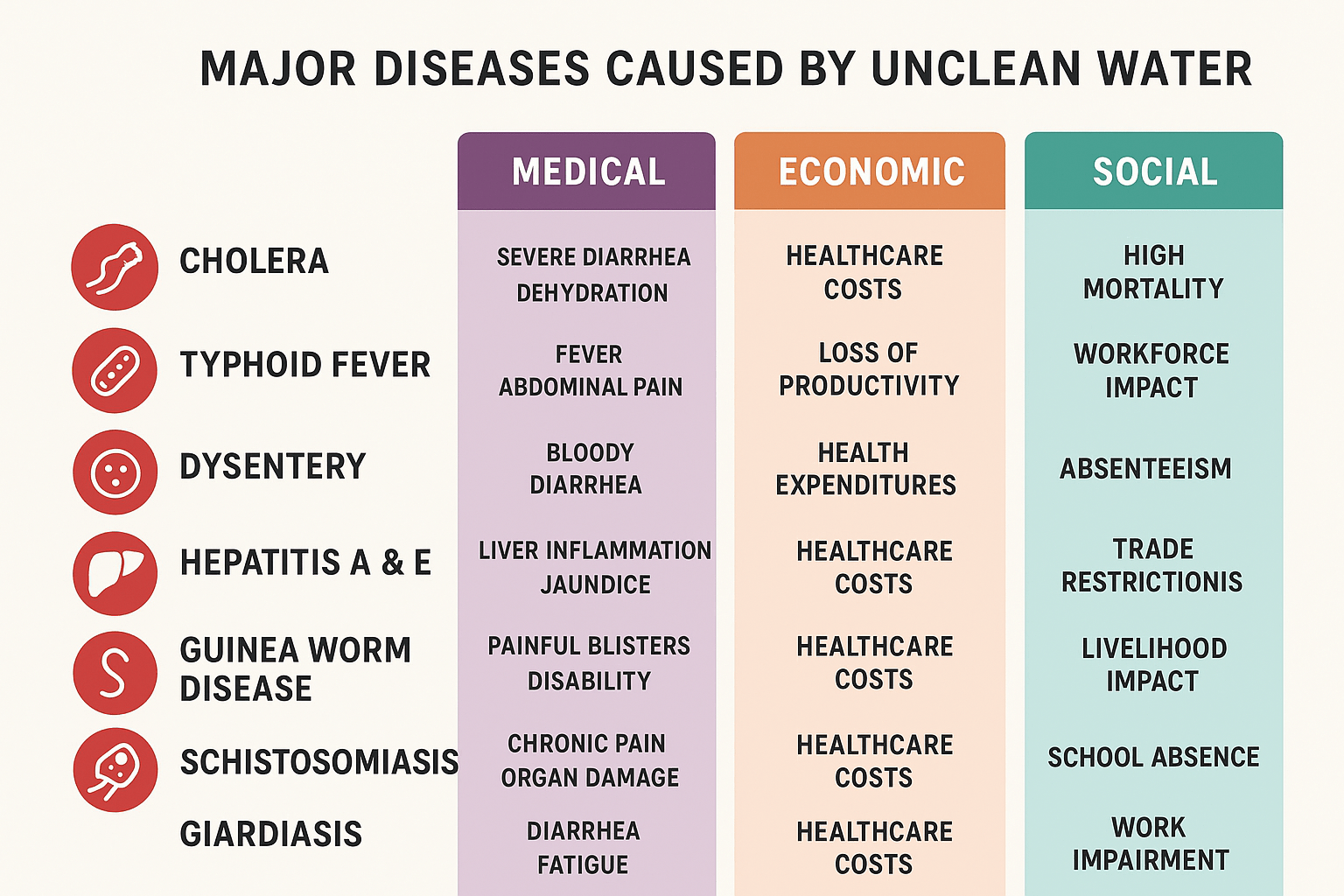
DiseaseCauseHealth EffectsRegions Most Affected
CholeraBacteria (Vibrio cholerae) from contaminated waterSevere diarrhea, dehydration, can be fatal within hoursYemen, Haiti, Mozambique, Malawi
Typhoid FeverSalmonella typhi from human waste in waterFever, weakness, abdominal painSouth Asia, Sub-Saharan Africa
DysenteryBacterial or amoebic infectionBloody diarrhea, dehydrationAfrica, South Asia, Latin America
Hepatitis A & EViral infection from fecal contaminationLiver inflammation, fever, jaundiceAfrica, Asia, parts of the Middle East
Guinea Worm DiseaseParasitic larvae from drinking waterPainful blisters, disabilityChad, Ethiopia, Mali (nearly eradicated)
Schistosomiasis (Bilharzia)Parasitic worms in freshwater snailsChronic pain, liver and kidney damageSub-Saharan Africa, Yemen
GiardiasisProtozoan parasite Giardia lambliaDiarrhea, cramps, fatigueWorldwide in poor sanitation areas
Polio (in some areas)Virus transmitted through contaminated waterParalysis, permanent disabilityPakistan, Afghanistan (residual cases)

⚕️ 2. Strain on National Medical Systems

a. Overburdened Health Infrastructure

  • Rural clinics in countries like Ethiopia, Niger, and Sudan spend up to 50% of their resources treating preventable waterborne illnesses.
  • Limited lab capacity and lack of clean water in hospitals make sterilization difficult — worsening infection rates.

b. Economic Drain

  • The World Bank estimates that unsafe water costs some African countries up to 5% of GDP annually due to healthcare costs and lost productivity.
  • Families spend much of their income on bottled or trucked water — leaving less for nutrition and medicine.

c. Child Mortality and Education Impact

  • 1 in 5 child deaths under age 5 in Sub-Saharan Africa is linked to dirty water or poor sanitation.
  • Illness keeps children, especially girls, out of school for days or weeks.

d. Long-Term Development Damage

  • Continual waterborne illness leads to malnutrition and stunted growth, reducing workforce capacity.
  • Hospitals and NGOs divert resources from chronic disease care to constant outbreak management.

🌍 Example: Yemen’s Health Crisis

  • The cholera outbreak since 2016 has infected over 2 million people, the largest in modern history.
  • Hospitals lack clean water, IV fluids, and electricity, so mortality remains high.
https://cleanwaterrelief.com

Posted in #CleanWaterCrisis, #CleanWater, #CleanWaterForAll, #EndWaterCrisis, #Sustainability #WaterIsLife #WaterCrisis | Leave a comment

Countries Overview

Top 10 Countries Facing Severe Clean Water Issue

1. Yemen 🇾🇪
– Over 15 million people lack access to clean water.
– Ongoing conflict and drought have destroyed infrastructure.
– Waterborne diseases (like cholera) remain widespread.

2. Ethiopia 🇪🇹
– Around 60% of rural communities lack basic drinking water.
– Droughts and rapid population growth strain water systems.

3. Chad 🇹🇩
– Only about 6% of rural areas have access to safe water.
– Lake Chad, once a major water source, has shrunk by over 90% since the 1960s.

4. Niger 🇳🇪
– One of the driest nations on Earth.
– Nearly 17 million people face chronic water scarcity.

5. Somalia 🇸🇴
– Decades of conflict and recurring droughts have left over half the population without safe drinking water.

6. Sudan 🇸🇩
– Civil unrest and desertification limit access for tens of millions, especially in rural Darfur and Kordofan.

7. Afghanistan 🇦🇫
– About 70% of the population lack safe water due to infrastructure collapse and contamination.

8. Pakistan 🇵🇰
– Rapid urbanization, poor sanitation, and pollution of the Indus River create major challenges.
80% of drinking water is considered unsafe by WHO standards.

9. Haiti 🇭🇹
– Repeated natural disasters have destroyed water systems.
– Around 5 million people lack basic water services.

10. Madagascar 🇲🇬
– Severe droughts in the south leave millions relying on unsafe surface water.
– One of the world’s lowest rates of clean water access.

https://cleanwaterrelief.com

Posted in #CleanWaterCrisis, #CleanWater, #CleanWaterForAll, #EndWaterCrisis, #Sustainability #WaterIsLife #WaterCrisis | Leave a comment

Regions Most Affected

Regional Overview

  • Sub-Saharan Africa: The hardest hit. Over 400 million people lack basic drinking water services.
  • Middle East & North Africa: The most water-scarce region on Earth — countries like Yemen, Jordan, and Saudi Arabia rely heavily on desalination.
  • South Asia: Bangladesh, India, and Pakistan face contamination (like arsenic) and overuse of groundwater.
  • Latin America: Haiti, Bolivia, and parts of Peru have persistent access and infrastructure issues.
  • Small Island States: Many (like in the Pacific) face saltwater intrusion due to rising sea levels.

https://cleanwaterrelief.com

Posted in #CleanWaterCrisis, #CleanWater, #CleanWaterForAll, #EndWaterCrisis, #Sustainability #WaterIsLife #WaterCrisis | Leave a comment

WORLD MAP OF CLEAN WATER ACCESS

https://cleanwaterrelief.com

Posted in #CleanWaterCrisis, #CleanWater, #CleanWaterForAll, #EndWaterCrisis, #Sustainability #WaterIsLife #WaterCrisis | Leave a comment

Unsafe Drinking Water: A Global Overview of Challenges

As of 2025, an estimated 2.2 billion people — about 1 in 4 people globallydo not have access to safely managed drinking water. This problem affects over 80 countries to varying degrees.

🌍 Global Overview

  • UNICEF and the World Health Organization (WHO) report that around 80–90 countries face moderate to severe clean water scarcity.

  • 29 countries are considered to have “extremely high” water stress — where demand exceeds available supply during parts of the year.

  • Over 50 countries, mostly in Africa, the Middle East, South Asia, and parts of Latin America, struggle with unsafe or unreliable water sources.

https://cleanwaterrelief.com

Posted in #CleanWaterCrisis, #CleanWater, #CleanWaterForAll, #EndWaterCrisis, #Sustainability #WaterIsLife #WaterCrisis | Leave a comment