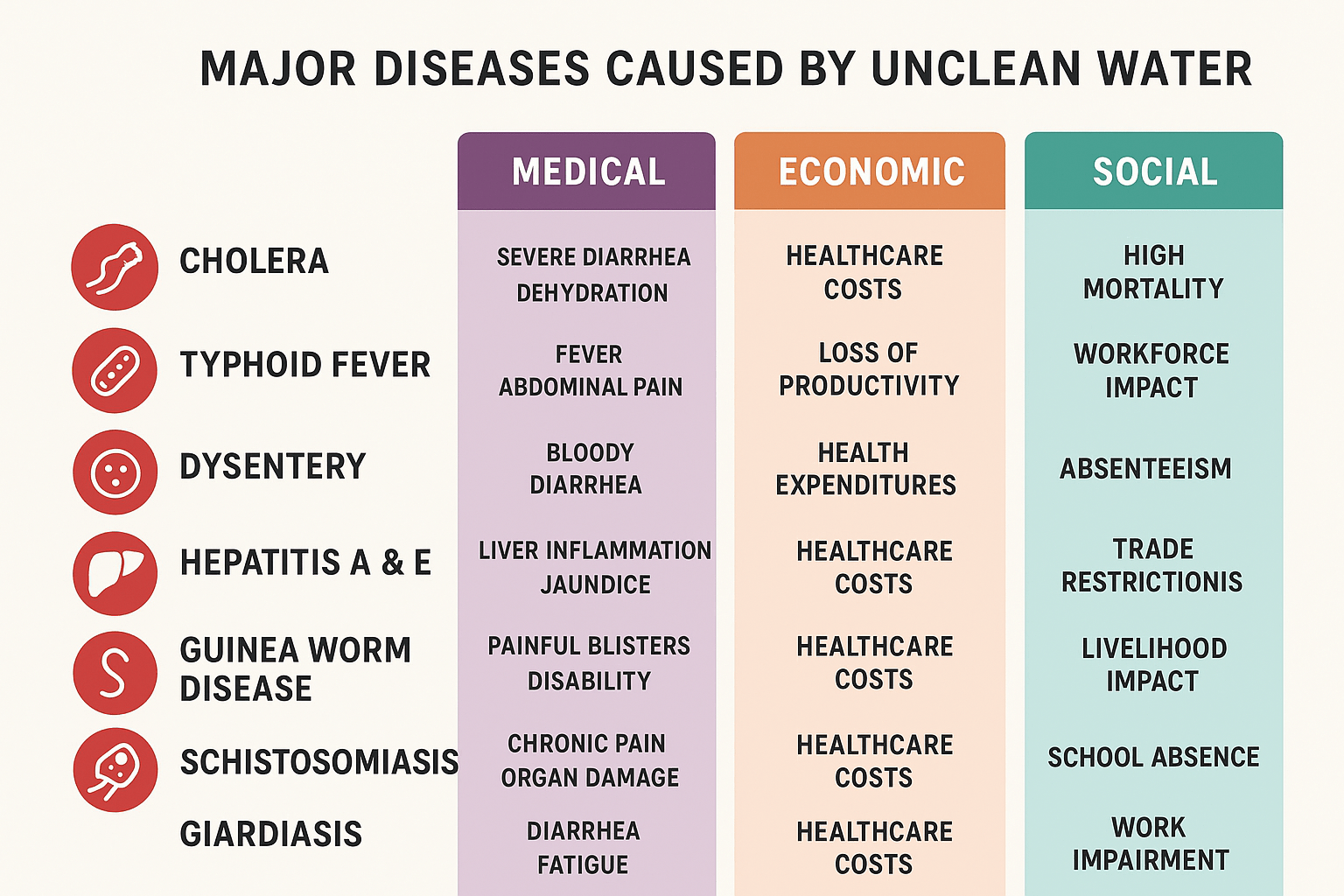
Unclean water doesn’t just cause illness; it creates a cycle of disease, poverty, and strain on national healthcare systems, especially in low-income regions. Here’s a breakdown of the main diseases and systemic impacts:
1. Major Diseases Caused by Unclean Water
| Disease | Cause | Health Effects | Regions Most Affected |
|---|---|---|---|
| Cholera | Bacteria (Vibrio cholerae) from contaminated water | Severe diarrhea, dehydration, can be fatal within hours | Yemen, Haiti, Mozambique, Malawi |
| Typhoid Fever | Salmonella typhi from human waste in water | Fever, weakness, abdominal pain | South Asia, Sub-Saharan Africa |
| Dysentery | Bacterial or amoebic infection | Bloody diarrhea, dehydration | Africa, South Asia, Latin America |
| Hepatitis A & E | Viral infection from fecal contamination | Liver inflammation, fever, jaundice | Africa, Asia, parts of the Middle East |
| Guinea Worm Disease | Parasitic larvae from drinking water | Painful blisters, disability | Chad, Ethiopia, Mali (nearly eradicated) |
| Schistosomiasis (Bilharzia) | Parasitic worms in freshwater snails | Chronic pain, liver and kidney damage | Sub-Saharan Africa, Yemen |
| Giardiasis | Protozoan parasite Giardia lamblia | Diarrhea, cramps, fatigue | Worldwide in poor sanitation areas |
| Polio (in some areas) | Virus transmitted through contaminated water | Paralysis, permanent disability | Pakistan, Afghanistan (residual cases) |
⚕️ 2. Strain on National Medical Systems
a. Overburdened Health Infrastructure
- Rural clinics in countries like Ethiopia, Niger, and Sudan spend up to 50% of their resources treating preventable waterborne illnesses.
- Limited lab capacity and lack of clean water in hospitals make sterilization difficult — worsening infection rates.
b. Economic Drain
- The World Bank estimates that unsafe water costs some African countries up to 5% of GDP annually due to healthcare costs and lost productivity.
- Families spend much of their income on bottled or trucked water — leaving less for nutrition and medicine.
c. Child Mortality and Education Impact
- 1 in 5 child deaths under age 5 in Sub-Saharan Africa is linked to dirty water or poor sanitation.
- Illness keeps children, especially girls, out of school for days or weeks.
d. Long-Term Development Damage
- Continual waterborne illness leads to malnutrition and stunted growth, reducing workforce capacity.
- Hospitals and NGOs divert resources from chronic disease care to constant outbreak management.
🌍 Example: Yemen’s Health Crisis
- The cholera outbreak since 2016 has infected over 2 million people, the largest in modern history.
- Hospitals lack clean water, IV fluids, and electricity, so mortality remains high.